
Let’s write your talk.
You’ve been telling yourself you’ll write this yourself… and you’ve been telling yourself that for a while now.
Maybe you did write it, and it isn't doing what you wanted it to do. Or there's nothing on paper yet at all — which is fine, and sometimes easier.
Either way, what happens next is the same. We find the idea that's actually yours, and then we build the talk around it.

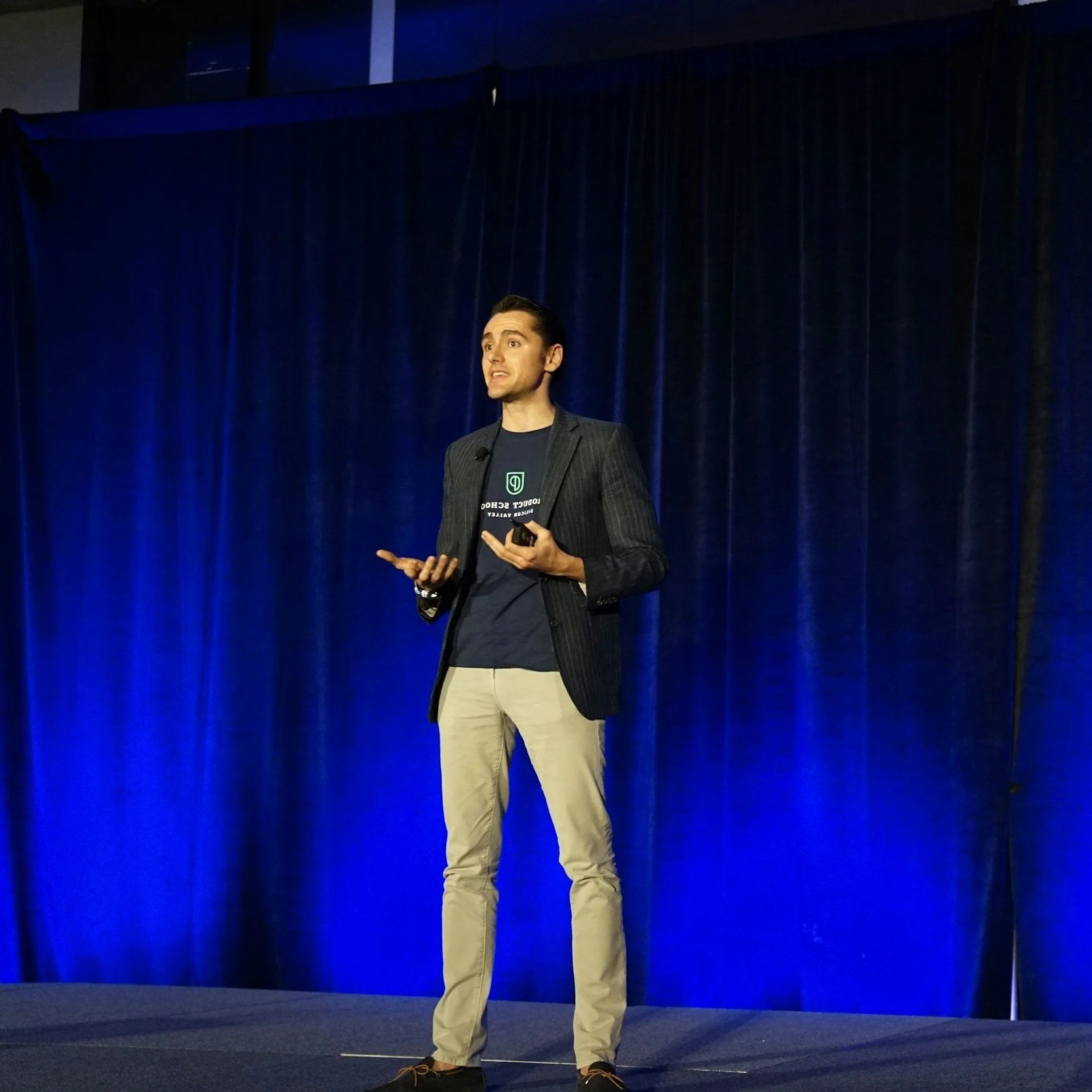
Imagine being excited to step up to the microphone because you know your talk is great
So how does this work, anyway?
We find the idea.
This is the part people skip and the part that matters most. Usually you already have it — you've just been standing too close to see it, or you've dismissed it because it's just your life and it seems ordinary to you. It isn't.
We build the structure.
A talk isn't an essay read aloud. It has a shape, and the shape is what makes an audience stay with you instead of checking their email.
We write it in your voice.
When you slip into "speech voice," I'll stop you and ask what actually happened. We'll throw out the clever lines that are doing less than you think they are, and protect the strange, specific, true ones that make this talk truly yours.
We rehearse it.
Even professional speakers do a few practice runs. If something sounds off out loud, we rewrite it on the spot. Nerves, pacing, presence — we'll work on all of it.

Whether or not your voice matches this sock puppet we’re going to crush it (the voice, not the sock puppet)
And when the talk is done…
One talk isn't a speaking career. Neither is one very good idea.
If you want to keep going — bigger stages, more of them, at a higher fee — there's more to build: additional talk summaries to show your range, a professional one-sheet, and copy for your speaker page. If you don't have a speaker page, we can take care of that, too.
We can do all of it, or we can do the talk and see how you feel.
Just in case you’re wondering …
Can’t I just use AI to write my talk?
Of course you can. But then it will sound like everyone else's talk, and I'll bet you have something more interesting to say. What AI can't do is push you toward the idea that's actually yours, or notice the story you skipped past because it seemed ordinary to you.
How long does this take?
That depends, but I hate vague answers, so: I like talks finalized two weeks before the event so you have time to practice. The whole process from start to finish takes about 2-3 months with us meeting on Zoom every other week. But if you're in a crunch, we'll figure it out.
Will you do my slides?
Yes, I'll delete them all. Kidding. But we will have a long conversation about whether you need them, because the moment you put up a slide, people stop listening and start reading. I'm not a designer, but I'll help you decide what belongs on screen — and I know people who can make them look great.
Do I need an event booked to start?
No. Some clients are working toward a date. Others are building a talk to attract the invitations. Either works.
What if I hate public speaking?
You're not alone, and you're not disqualified. Ask a professional speaker how nervous they are before they go on — on a scale of one to ten — and a lot of them will say eleven. I'm not a performance coach, but I've worked with hundreds of speakers, many of them brand new to it. We'll focus on being prepared and authentic, not perfect. (Also: it's very endearing to audiences when you show vulnerability. Brené Brown gave a whole talk about it …)
Will you get me booked?
I don't do speaker booking. What I do is give you everything you need to get booked: a talk worth referring, materials that back it up, and clear messaging that makes an organizer remember you.
Q: do I need to make my living room look like a stage for practicing? A: no, but you do you.